
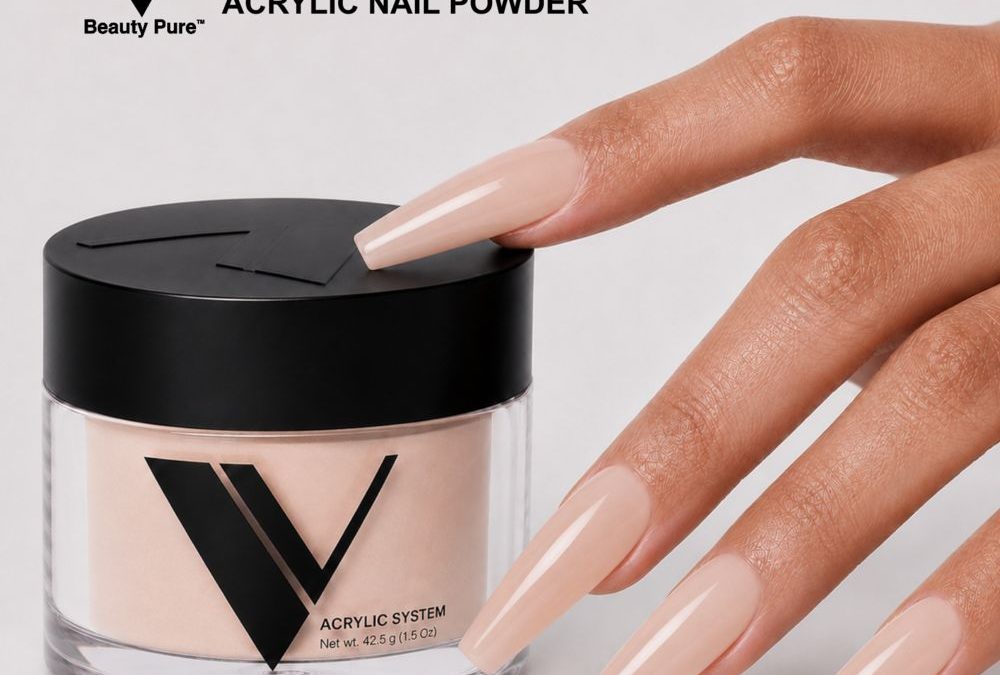
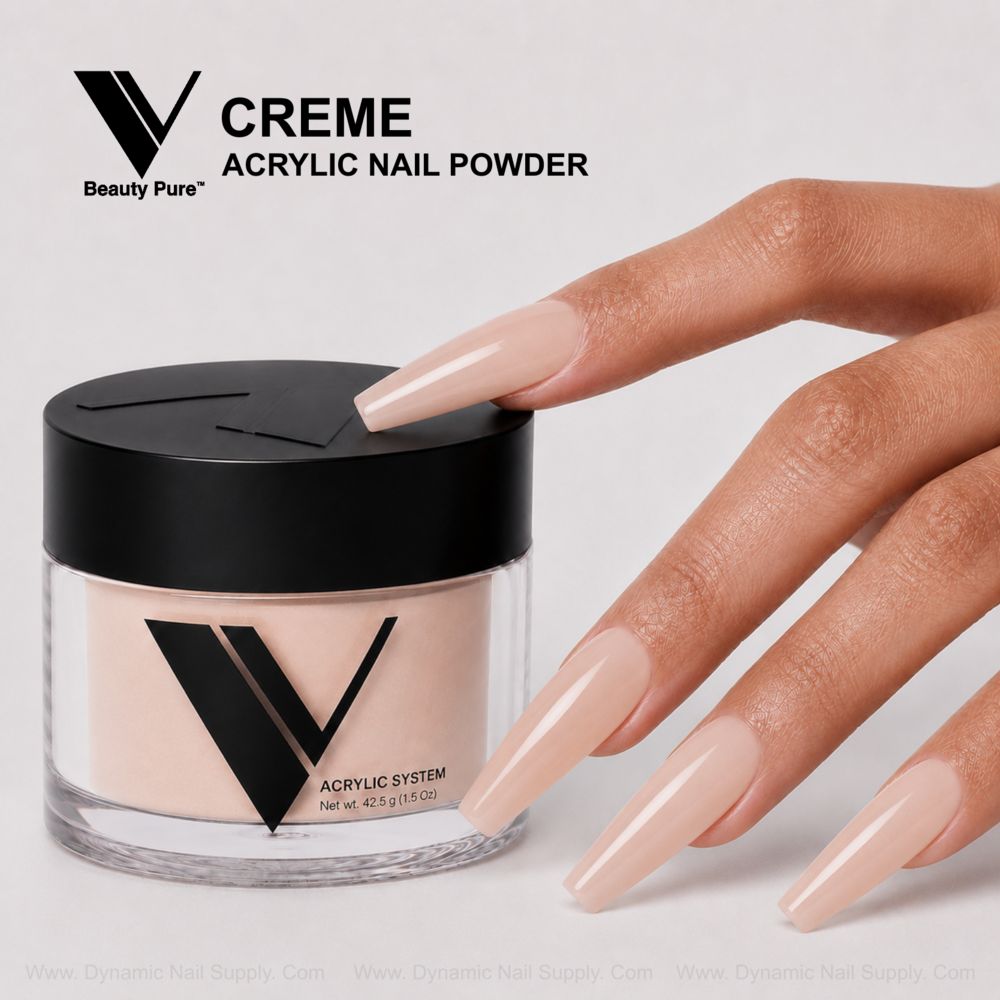
Quick comparison: Creme is a pale nude-peach powder that reads very sheer and skin‑matched on the nail, while the sheer milky pink finish seen on the tips creates a glassy, bridal-ready glow. Which one should sit at the smile line, and which one should float toward the free edge? The answer shapes the ombré.
How to avoid planning the fade with the wrong opacity
Question: Why does the ombré look patchy or too heavy early in the build? Answer: Because Creme is naturally sheer and can be overwhelmed if a denser pink is placed on top too soon. What is the correct approach? Start with the shade that reads lighter on the nail bed and use the milky pink to feather out toward the free edge rather than trying to bury Creme under heavy color.
Question: How should bead sizes change across the nail? Answer: Use smaller, more controlled beads near the cuticle with Creme and slightly larger, softer beads as the technician moves toward the free edge to encourage a soft gradient. Question: What about placement? Answer: Keep a clear plan for where the mid-point of the ombré will sit and mark it mentally before placing the first bead.
How to stop hard lines and visible joins when blending
Question: Why do hard demarcations appear after curing? Answer: Because the powders were applied in distinct zones without brushing or working the transition while the monomer is active. What is the correct approach? Work wet-to-wet. Place the Creme bead and the sheer pink bead adjacent, then use gentle back-and-forth brush taps to coax the powders into each other before the monomer skins over.
Question: What brushwork prevents a ridge? Answer: Use a large, soft acrylic brush held almost flat and use light patting and feathering motions. Question: How to adjust timing for long nails? Answer: For long sculpted tips give each transition a split-second longer to meld—longer nails need slightly more working time to sit smooth and glossy like the photo.
How to choose the right sequence and supplies
Question: What supplies are essential for a consistent nude-peach to sheer pink ombre? Answer: A high-quality EMA monomer, a soft high-capacity acrylic brush, and a jar of Creme with its matte black lid for clear visual cues. Question: What is a common supply mistake? Answer: Using a heavy-bodied monomer or the wrong brush that picks up too much powder and drags the ombré into visible streaks.
For this technique bring these supplies together:
Question: Should the technician pre-mix powders? Answer: No. Keep each powder separate and blend on the nail. Question: Is faster always better? Answer: No. Rushing the sequence produces bubbles and uneven beads; work deliberately so the self-leveling quality of the powders can do its job.
How to prevent loss of sheen and glass-like finish
Question: Why does the finish dull after filing? Answer: Because aggressive filing can remove the thin glossy outer layer that reads like a mirror. What is the correct approach? File with light passes and finish with a gentle buffing protocol, preserving the high-gloss cured surface demonstrated on the long sculpted nails in the photo.
Question: When should a high-shine topcoat be used? Answer: After the ombré is refined and dust is fully removed. Question: How does the thin, creamy bead quality shown in the image help? Answer: The fine, buttery acrylic beads allow a smoother filing finish and less bulk at the transition, which makes it easier to achieve that glass-like sheen.
How to match the shade to the client’s skin and requests
Question: Why does Creme look different on various skin tones? Answer: Because it’s a very sheer nude-peach designed to sit close to skin. What is the correct approach? Preview the shade against the client’s hand and plan whether the milky pink should dominate the free edge for a bridal look or stay subtler for everyday wear. Question: What if the client wants more opacity? Answer: Build additional thin layers of the sheer pink toward the tip rather than packing on Creme, which will retain the natural nude effect.
How to handle curing, adhesion and safety
Question: Does this powder need a special monomer? Answer: It is formulated for compatibility with professional EMA monomers. What is the correct handling? Use only professional EMA-compatible liquid monomers and follow standard ventilation and PPE practices in the salon. Question: Are there formulation benefits that help the ombré? Answer: Yes—self‑leveling and a non‑yellowing powder reduce rework and keep the soft nude-peach to milky pink transition clear over time.
Work wet-to-wet and feather with a soft brush so the pale nude-peach and sheer milky pink melt into one another.
Quick troubleshooting Q&A
- Question: What if the midline shows a stripe after curing? Answer: Add a tiny wet bead at the stripe and feather immediately.
- Question: What if the free edge looks too pink? Answer: Lightly file the edge and add a thin Creme bead near the transition to soften the tone.
- Question: What if the ombré lifts at the cuticle? Answer: Re-check prep and adhesion; use thin beads near the cuticle and avoid flooding the eponychium.
Final checklist recap:
- Plan the mid-point and bead sizes before starting.
- Work wet-to-wet with a soft, flat brush to avoid hard lines.
- Keep supplies EMA-compatible and use light filing to preserve sheen.
- Match Creme’s nude-peach to the client’s skin and build opacity with the milky pink.
- Maintain good ventilation and standard PPE while working with monomer.