
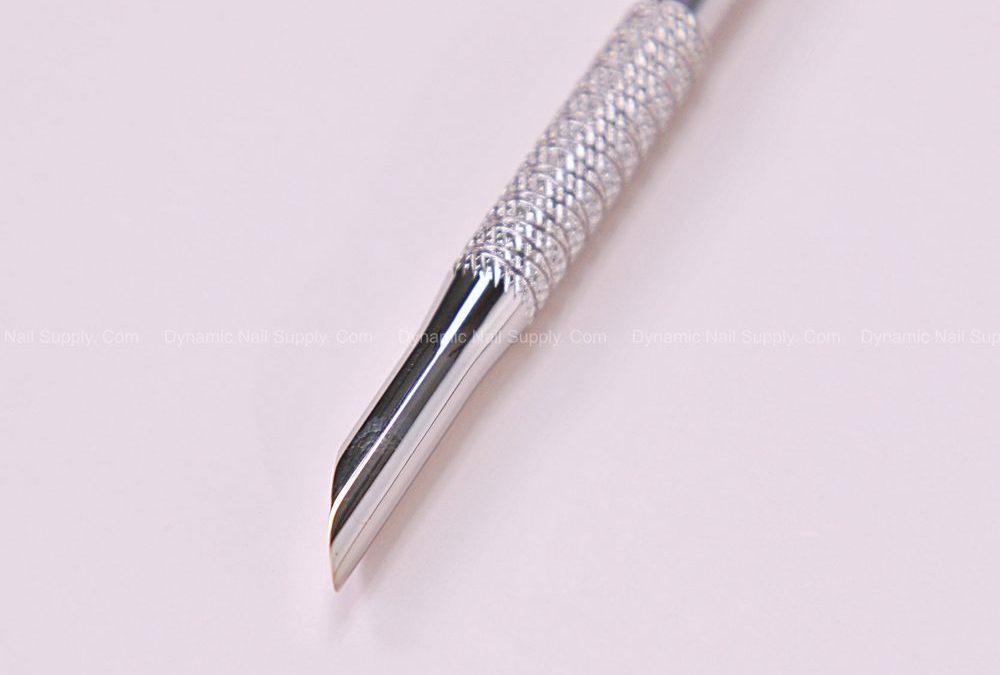
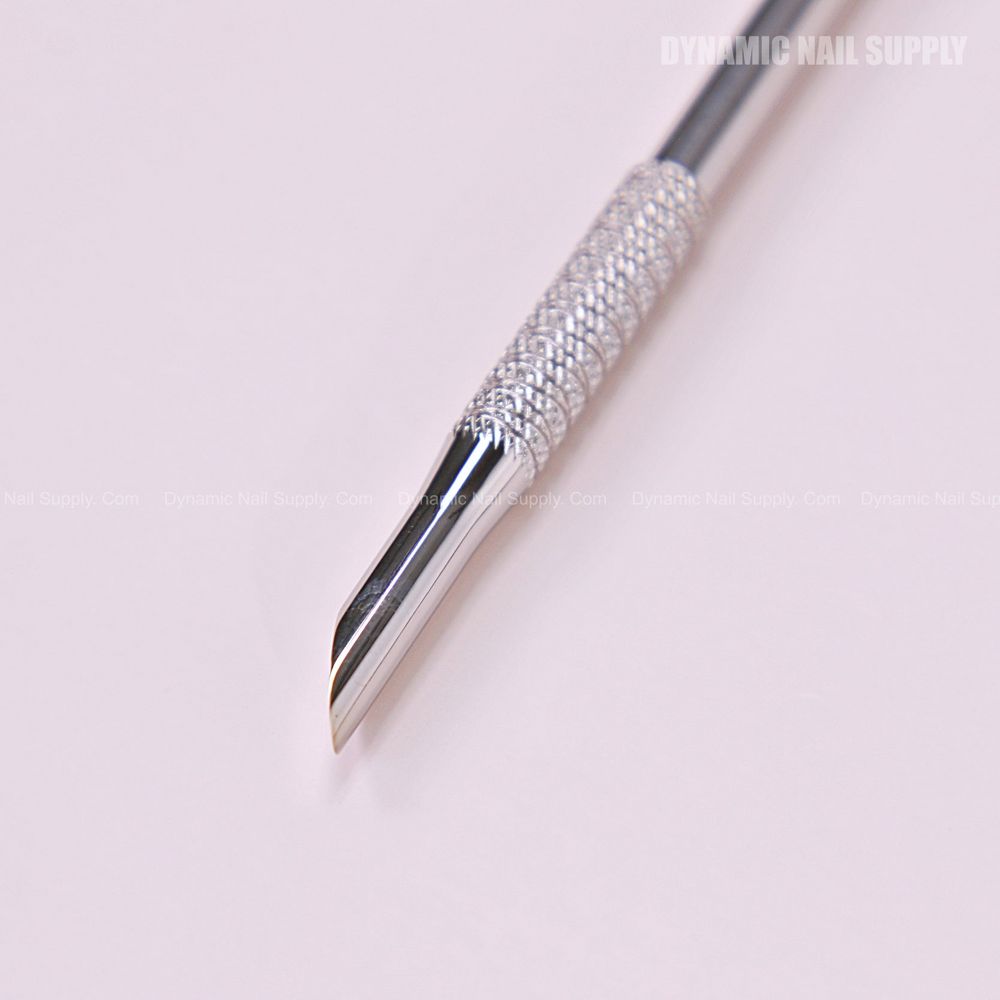
Quick comparison: a short, double-ended stainless steel tool with mirror-polished ends and a finely knurled matte grip versus a long, bulky pusher built for average nail beds. Which is better for small or narrow nail beds? The short, precise tool usually wins for control and minimal overreach.
How to avoid assuming one size fits all
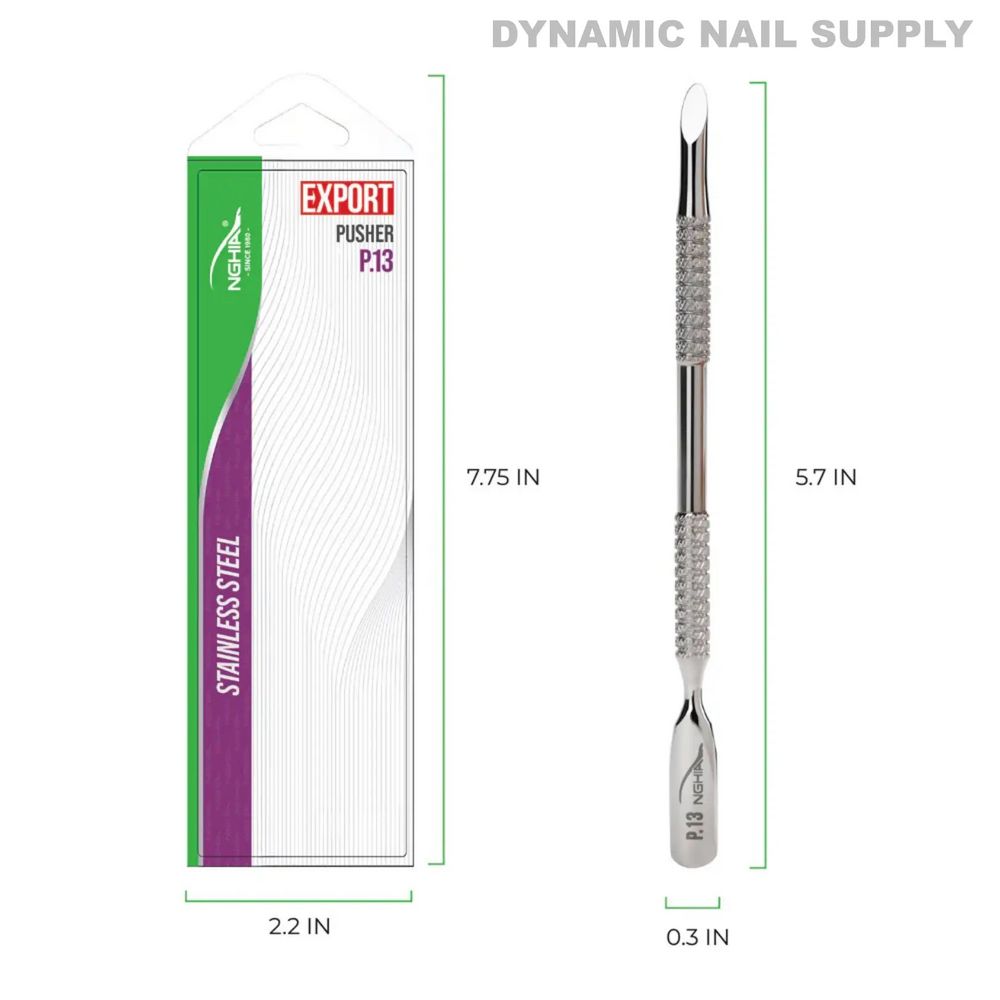
What is the mistake? Choosing a standard-length pusher and expecting it to work the same on petite nails. Why does this happen? Salons keep a single go-to pusher in every kit because it seems efficient. What is the correct approach? Match handle length and head profile to nail width: a compact 5.7″ tool reduces wrist extension and keeps the technician’s hand close to the work.
How to avoid overestimating head diameter
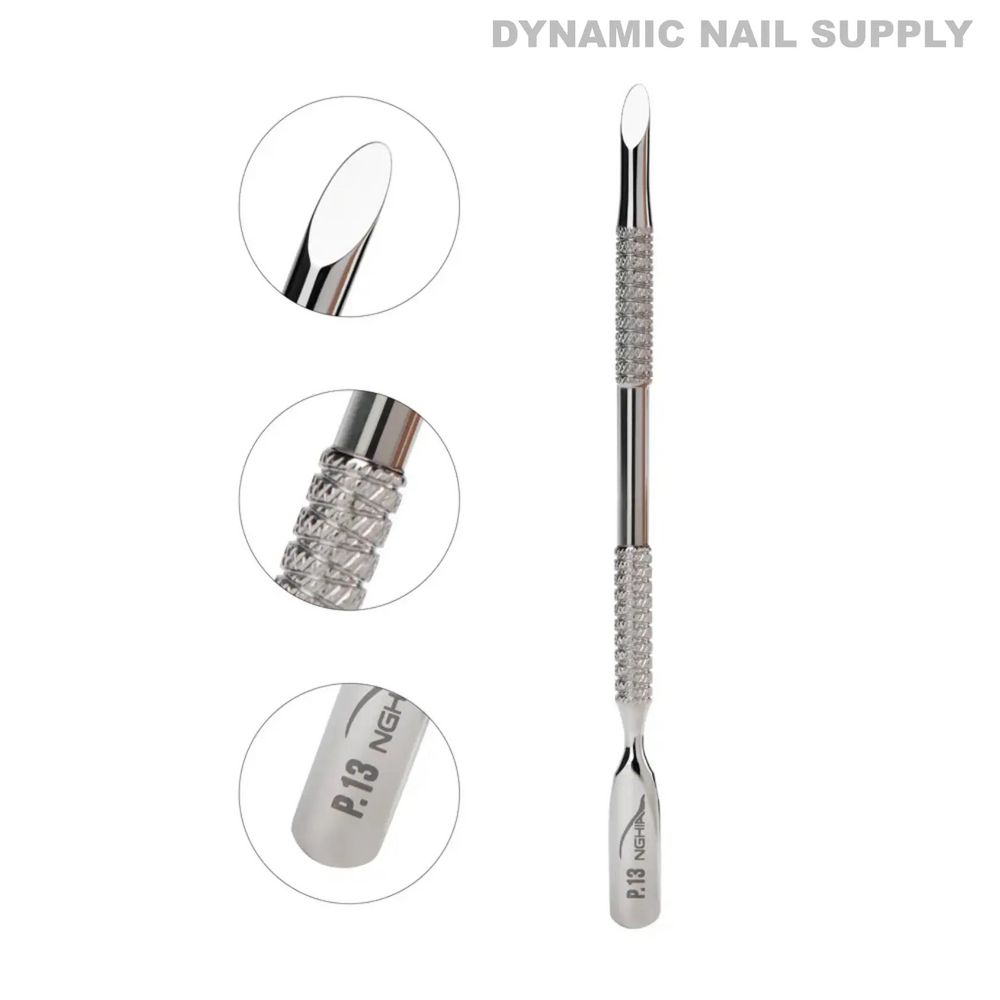
What is the mistake? Picking a pusher with wide spoon or bevel ends that overwhelm a narrow nail plate. Why does this happen? Product photos often show the tool alone and judges misread scale. What is the correct approach? Use a pusher with smaller, oval ends for detailed work; the oval end lifts the cuticle without contacting excess surrounding skin. The P-13’s double-function oval and cylinder ends are designed to sit neatly on petite cuticle lines for precise control.
How to avoid ignoring grip texture for fine work
What is the mistake? Grabbing any stainless tool and assuming grip won’t affect accuracy. Why does this happen? Grip is less visible in thumbnails and specs. What is the correct approach? Prioritize a non-slip textured handle that prevents micro-slips during tiny motions. A finely knurled matte band concentrates contact and reduces wrist corrections, helping the technician maintain a clean angle on small nails.
How to avoid using excessive pressure on small nail plates
What is the mistake? Believing firmer pressure equals faster results. Why does this happen? Technicians who are used to thicker plates or quick service times push harder to speed jobs. What is the correct approach? Use light, controlled pressure and incremental pushes. For petite plates the cylinder end that cleans the nail surface is useful for removing buildup without aggressive scraping; the oval end then lifts the cuticle gently for trimming.
How to avoid overlooking finish and reflective cues
What is the mistake? Buying tools without considering finish because finish seems cosmetic. Why does this happen? Shiny tools photograph well and sell on appearance without clear discussion of sightlines. What is the correct approach? A mirror-polished shaft helps reflect workspace lighting so the technician sees edges and contours clearly, but a balanced contrast with matte grip prevents glare at the contact point. The P-13’s combination of reflective ends and matte knurling is built to support visibility and hand placement in tight work areas.
How to avoid forgetting sterilization and durability for frequent small-plate work
What is the mistake? Selecting a delicate-looking instrument for repeated daily use on many clients. Why does this happen? A lightweight or decorative tool can seem attractive for display but fail under sterilization cycles. What is the correct approach? Choose stainless steel with an anti-rust finish and quality construction so repeated autoclave or chemical sterilization won’t degrade edges or grip. A shop should prefer a tool that keeps shape and texture through routine sanitation.
How to avoid buying for appearance instead of ergonomics
What is the mistake? Selecting a tool that matches salon décor rather than technician comfort. Why does this happen? Visual cohesion is tempting when merchandising kits. What is the correct approach? Test balance and wrist alignment for small-nail workflows. An ergonomically structured shaft that keeps the hand close to the nail reduces fatigue and improves repeatable results across clients with narrow beds.
Choose a compact, textured, double-ended pusher that keeps the hand steady and the head proportional to the nail.
How to adapt technique when switching tools
What is the mistake? Using identical motions and force with a new pusher. Why does this happen? Habits form around one tool and transfer without recalibration. What is the correct approach? Relearn angle and wrist motion: start with light strokes, evaluate how the oval end lifts tissue, then switch to the cylinder end for plate cleaning. For small nails, reduce the arc of motion and favor shorter pushes that preserve cuticle integrity.
How to choose inventory for consistent small-nail service
What is the mistake? Keeping only one style in stock. Why does this happen? Simplified inventory seems easier to manage. What is the correct approach? Stock at least one compact double-ended pusher with small heads and a textured grip for narrow nails, and a larger alternative for wider plates. Rotate and inspect tools for wear; replace any that lose texture or show corrosion. Note: the P-13 is priced at $6.99 but prices may change; consider cost vs. durability when you buy.
Final checklist recap
- Match handle length to technician reach; shorter tools reduce overreach.
- Choose smaller oval or cylinder heads for narrow nail plates.
- Prioritize non-slip knurled grips for micro-control.
- Practice lighter, shorter pushes on delicate plates.
- Pick stainless tools with anti-rust protection for repeated sterilization.
- Balance mirror finish for visibility with matte texture at the grip.
- Keep a compact double-ended pusher in inventory for petite nail services.
For salon managers assembling kits for clients with small or narrow nail beds, a compact double-ended pusher that pairs mirror-polished ends with a finely knurled matte handle answers the most common mistakes listed here; consider the P-13 cuticle pusher as a practical option that addresses head size, handle control and durability for petite nails.
For compact kits focused on petite nails, choose the P-13 cuticle pusher for its small heads and textured grip to improve precision P-13 cuticle pusher.